Choosing China’s top Metal Tube manufacturers requires more than comparing factory size or export volume. A polished website is not proof of consistent production. Real evaluation begins with material control, forming accuracy, weld quality, surface finishing, and traceable inspection records.
Joseph M. Juran, a respected manufacturing quality expert, wrote, “Quality does not happen by accident. It has to be planned.” His principle fits Metal Tube production closely. A reliable supplier should explain how it controls stainless steel, carbon steel, aluminum, or nickel alloys from incoming inspection to final packing. Look for measurable tolerances, documented testing, and clear responses to technical questions.
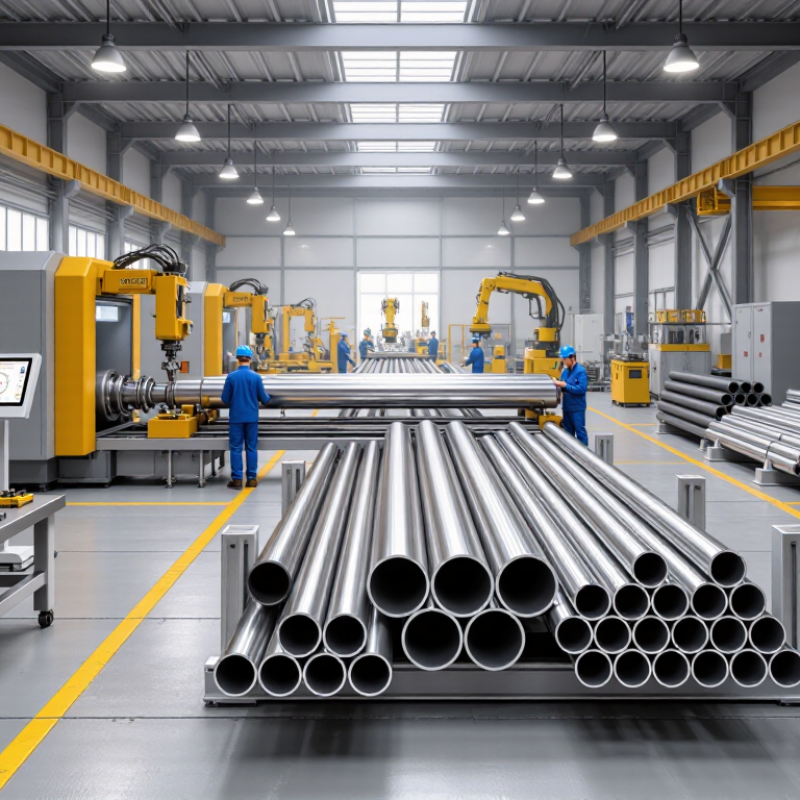
Factory experience also matters. A serious manufacturer can discuss tube diameter, wall thickness, cutting length, bending limits, and application risks without hiding behind general promises. Its production floor should show practical details, such as calibrated gauges, automated weld lines, pressure-testing equipment, and protected storage areas. These details reveal more than a long product list.
Still, no ranking is perfect. Buyer requirements differ. An automotive customer may prioritize fatigue resistance, while a furniture manufacturer may value appearance and price. Some suppliers excel at standard sizes but struggle with small custom batches. Others offer impressive capacity but weak communication. This guide compares leading Chinese Metal Tube manufacturers through capability, quality evidence, customization, delivery reliability, and industry experience. The goal is not to praise the largest factory automatically. It is to identify the supplier whose actual process matches your technical needs, budget, and expected service life. Expect useful comparisons, but verify critical claims independently. Supplier selection should remain a technical decision, not a catalogue decision.
China’s metal tube industry is shaped by scale, process depth, and demanding downstream applications. The World Steel Association reported China produced about 1.005 billion tonnes of crude steel in 2024. That upstream capacity supports extensive tube production, but steel volume alone does not identify a top manufacturer. Quality depends on forming accuracy, welding control, heat treatment, and inspection discipline.
Manufacturers serve construction, energy, automotive, machinery, and fluid-handling projects. Common products include seamless tubes, welded tubes, precision tubes, and stainless steel tubes. The International Organization for Standardization and ASTM International publish widely used requirements for dimensions, testing, and material performance. Reliable factories normally provide mill certificates, batch traceability, pressure-test records, and independent inspection options. In practice, documentation can reveal more than a polished factory tour. This is where many buyers still underestimate risk.
Tips: Compare tolerances, not only prices. Request recent test reports and sample data. Check whether production records match the quoted grade. Also examine non-destructive testing methods, surface protection, and packaging for long-distance transport. A low-cost tube may become expensive after bending, leakage, or rejection. Some supplier claims remain difficult to verify, so an on-site audit is valuable. Yet audits are not perfect either; production conditions can change after approval. A stronger evaluation combines technical review, sample testing, and repeat inspections.
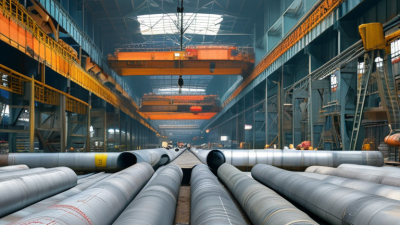
China’s metal tube manufacturers serve construction, machinery, energy, furniture, and transport industries. Their production ranges from standard welded tubes to tightly controlled seamless products. Material choice depends on pressure, corrosion, temperature, and forming requirements.
Carbon steel tubes remain common for structural frames, scaffolding, and fluid lines. Stainless steel tubes suit food equipment, medical tools, and damp environments. Galvanized steel tubes add a zinc layer for outdoor protection, although damaged coatings may still rust. Aluminum tubes offer low weight and good corrosion resistance. Copper tubes transfer heat efficiently in plumbing and refrigeration systems.
Manufacturers also produce round, square, rectangular, oval, and special-shaped tubes. Welded tubes usually support cost-sensitive projects and larger dimensions. Seamless tubes are preferred for demanding pressure applications, but their higher cost needs justification. Precision tubes may require strict control of wall thickness, straightness, and surface finish. Check those details carefully. A polished surface does not prove internal quality.
During supplier evaluation, buyers should review material certificates, dimensional reports, weld testing, and traceability records. Sample inspections can reveal dents, uneven edges, or inconsistent coating thickness. Small differences matter. Production capacity alone is not enough; tooling capability, heat treatment, packing methods, and export experience also affect results. Some specifications look complete but leave tolerances unclear, which can create avoidable disputes.
Identifying China’s top metal tube manufacturers requires more than comparing catalog prices. Look for proven production experience, stable material sourcing, and clear quality procedures. A reliable supplier should explain tube grades, dimensions, tolerances, surface finishes, and application limits without vague claims. Numbers can mislead. Ask for recent inspection reports, sample records, and production photographs. Check whether the factory controls cutting, forming, welding, heat treatment, and packing internally. These details often reveal real capability better than a polished website.
Tips: Request samples from different production batches, not only one attractive piece. Measure wall thickness, outer diameter, straightness, and weld quality with documented tools. Confirm whether testing follows recognized international standards. A factory audit should review equipment maintenance, worker training, storage conditions, and traceability. Also ask how defects are handled after delivery. Clear answers usually indicate stronger operational discipline.
Experience matters when evaluating export manufacturers. Speak with technical staff, not only sales representatives. They should understand corrosion risks, load requirements, tolerances, and packaging damage. Review their capacity carefully; a very large claimed output may hide subcontracting. That is not automatically unacceptable, but it needs disclosure and control. I have found that communication speed can create false confidence. A fast reply is useful, yet consistent technical answers matter more. The best choice may still require a second inspection before full production.
| Evaluation Dimension | Weight | What to Verify | Reliable Evidence or Reference | Strong-Candidate Benchmark | Score Guide |
|---|---|---|---|---|---|
| Quality Management System | 15 points | Whether the production and inspection system is documented, controlled, and regularly audited. | Valid ISO 9001 certificate, audit scope, quality manual, corrective-action records, and inspection procedures. | Certificate verified and scope matches tube production | 0–15 |
| Material Traceability | 12 points | Ability to trace raw material from heat or coil number through forming, welding, heat treatment, testing, and shipment. | Mill test certificates, heat-number records, batch records, barcode or ERP traceability, and sample material certificates. | Full heat-to-shipment traceability | 0–12 |
| Product Standards and Compliance | 12 points | Capability to manufacture according to the customer’s specified material grade, dimensions, testing requirements, and applicable standard. | Production records and test reports referencing standards such as ASTM A269, ASTM A519, EN 10217, EN 10305, or equivalent project specifications. | Consistent compliance with required standards | 0–12 |
| Dimensional Control | 10 points | Control of outside diameter, wall thickness, length, ovality, straightness, and surface condition. | Calibrated micrometers, laser gauges, wall-thickness gauges, inspection plans, capability studies, and dimensional reports. | 100% or risk-based inspection with calibrated equipment | 0–10 |
| Welding and Forming Capability | 10 points | Suitability of forming, longitudinal welding, drawing, sizing, annealing, polishing, and cutting processes for the required tube type. | Process flow charts, welding procedure specifications, operator qualifications, equipment list, and production samples. | Stable process control for the required tube category | 0–10 |
| Testing and Inspection Capacity | 10 points | Availability of mechanical, chemical, hydrostatic, eddy-current, ultrasonic, surface, and visual testing as required. | In-house laboratory records, calibrated instruments, third-party reports, and test methods linked to the purchase specification. | Required tests available with documented results | 0–10 |
| Production Capacity and Delivery Reliability | 10 points | Whether capacity, scheduling, and inventory can support repeat orders without compromising quality. | Capacity statement, production schedule, historical on-time delivery data, lead-time records, and contingency plans. | Capacity is documented and delivery performance is measurable | 0–10 |
| Customization and Engineering Support | 8 points | Ability to support custom alloys, wall thicknesses, lengths, end finishes, surface treatments, packaging, and inspection plans. | Approved drawings, technical data sheets, sample-development records, tolerance review, and engineering response time. | Can validate custom requirements before mass production | 0–8 |
| Environmental and Occupational Management | 5 points | Control of emissions, wastewater, waste handling, worker safety, and environmental responsibilities. | Applicable ISO 14001 or ISO 45001 certificates, environmental permits, safety procedures, and inspection records. | Relevant systems and permits are current and verifiable | 0–5 |
| Export Documentation and Packaging | 4 points | Accuracy of commercial documents, marking, certificates, export packaging, corrosion protection, and container loading. | Sample commercial invoice, packing list, certificate of origin, inspection certificate, packaging specification, and shipping photographs. | Complete documents and damage-resistant packaging | 0–4 |
| After-Sales Response and Risk Control | 4 points | How the supplier handles nonconformities, claims, replacement, root-cause analysis, and corrective action. | Written warranty terms, complaint procedure, response-time commitment, corrective-action report, and references from comparable projects. | Documented claim process with accountable response times | 0–4 |
| Total Evaluation | 100 points | Combine the weighted scores after verifying documents, samples, factory conditions, and production records. | Use a supplier audit, sample order, pre-shipment inspection, and independent testing for critical applications. | 80–100: strong candidate; 60–79: further verification required; below 60: high qualification risk | 0–100 |
Leading metal tube manufacturers in China are judged by more than production volume. Strong suppliers control material sourcing, tube forming, welding, heat treatment, and dimensional inspection. Many operate automated lines for round, square, rectangular, and precision tubes. Their capabilities often include stainless steel, carbon steel, aluminum, and alloy materials. Reliable factories also provide certificates, traceable batches, and sample testing before mass production. A polished catalog is not proof. Buyers should review actual inspection records and factory capacity.
These manufacturers serve construction, automotive, furniture, energy, medical equipment, and industrial machinery markets. Structural tubes may support frames, platforms, and warehouse systems. Precision tubes can carry fluids, protect cables, or fit inside compact equipment. Automotive customers usually require consistent wall thickness and clean welds. Industrial projects may need custom lengths, corrosion resistance, or tight tolerances. Experienced engineers can recommend suitable grades and forming methods. However, one supplier may not excel in every application. That limitation deserves honest discussion.
Tips: Request a production sample before approving a large order. Check outer diameter, wall thickness, surface finish, and straightness. Ask how defects are recorded and corrected. Confirm packaging for long-distance transport, especially when thin walls may dent. Compare technical responses, not only prices. A low quote can hide weaker testing, slower communication, or unsuitable material. Allow room for design review; early assumptions sometimes create expensive rework.
China’s leading metal tube manufacturers compete on quality systems, export reliability, and production flexibility.
The World Steel Association reported 1.888 billion tonnes of global crude steel production in 2023. This scale creates strong material availability, but it does not guarantee consistent tubing. Buyers should inspect chemistry control, heat treatment, dimensional accuracy, and surface protection.
Certification is only the starting point.
The ISO Survey 2022 recorded more than 1.26 million ISO 9001 certificates worldwide, showing how common quality certification has become. A serious manufacturer should provide traceable heat numbers, mill test certificates, calibration records, and third-party inspection access. ASTM, EN, or other agreed standards must match the project’s pressure, corrosion, and temperature requirements. Small details matter. A clean certificate cannot replace a failed sample test.
Export strength appears in more practical evidence.
Check shipment history, packaging photographs, customs documentation, and the supplier’s ability to repeat identical specifications. For large orders, buyers should compare wall-thickness tolerance, welding quality, bundle protection, and replacement procedures. UN Comtrade records under HS codes 7304 and 7306 can help verify a supplier’s country-level export activity, although trade statistics rarely identify factory performance. I would not select a manufacturer from price alone. That approach is attractive, but often incomplete. A factory may offer excellent samples and weaker mass production. Independent inspections before shipment remain worthwhile.