China’s Steel Tube industry is a major supply base for construction, energy, machinery, automotive, and infrastructure projects. Global buyers need more than a low quotation. They must examine steel grade, outside diameter, wall thickness, welding method, heat treatment, coating, testing, and delivery capacity.
The World Steel Association reported global crude steel production of about 1.89 billion tonnes in 2023. Its Short Range Outlook also showed that construction and manufacturing remain closely tied to steel demand. Meanwhile, the International Energy Agency identifies heavy industry as a major source of global carbon emissions. This makes traceability and lower-carbon production increasingly important when selecting Steel Tube suppliers.
“Steel is an essential material for our society,” says Edwin Basson, Director General of the World Steel Association. His point applies directly to tube purchasing. A pipe may look simple, yet one inconsistent weld can create serious project delays. That risk deserves attention.
This guide reviews China’s top 10 Steel Tube manufacturers for global buyers. The selection considers production scale, export experience, certification, product range, quality systems, and application expertise. It is not a permanent ranking. Markets change, factories expand, and certificates can expire.
Buyers should still request recent mill test certificates, third-party inspection records, sample dimensions, and references from comparable projects. A polished website is not proof of reliable production. Nor is the lowest price. Some supplier claims remain difficult to verify without an audit. That is an uncomfortable, but necessary, limitation.
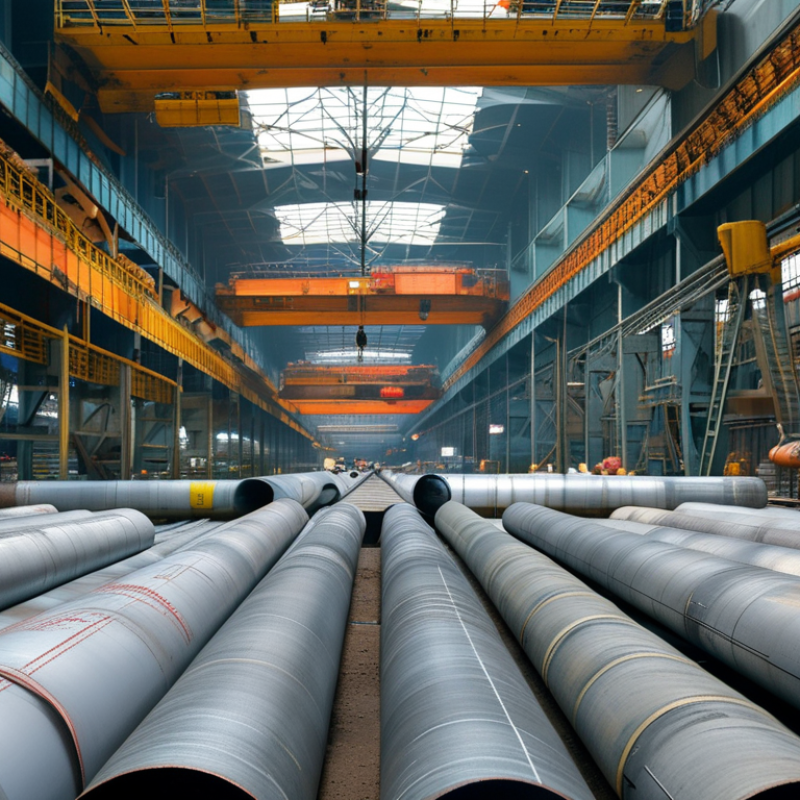
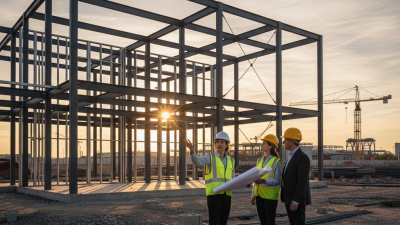
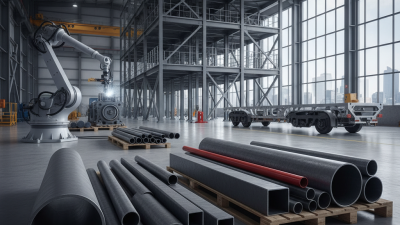
China’s steel tube industry serves construction, energy, machinery, transportation, and infrastructure projects worldwide. Its product range includes seamless tubes, welded tubes, ERW tubes, spiral tubes, galvanized tubes, and precision tubing. Each type fits a different service condition. For example, seamless tubes often suit high-pressure applications, while welded tubes can offer efficient production for structural projects.
Manufacturers commonly work with GB/T, ASTM, ASME, API, EN, and ISO requirements. The correct standard depends on the project, destination, steel grade, dimensions, testing rules, and documentation. Experienced buyers should review mill certificates, chemical analysis, tensile results, hydrostatic tests, and dimensional reports. Traceability matters. Heat numbers should connect the raw material, production records, inspection results, and shipping documents.
China’s global role is supported by broad production capacity, developed ports, and a mature supply chain. Buyers can often request customized outside diameters, wall thicknesses, lengths, coatings, and end finishes. Yet low pricing should not decide the purchase alone. A cheaper tube may create delays through poor tolerances or incomplete paperwork. This is easy to underestimate. Factory audits, sample inspections, and independent testing can reduce that risk. No supplier is perfect, and even a capable producer may misunderstand a technical specification. Clear drawings, written acceptance criteria, and direct communication remain essential. The strongest sourcing decision balances price, standards compliance, manufacturing experience, inspection evidence, and dependable delivery.
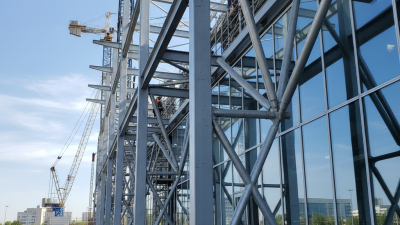
Selecting China’s top ten steel tube manufacturers requires more than comparing factory photos or quoted prices. A credible ranking should examine production scale, technical control, export experience, and documented quality systems. World Steel Association data recorded China’s crude steel production at about 1.005 billion tonnes in 2024, representing more than half of global output. However, national capacity does not guarantee consistent tube quality. Buyers should verify actual mill ownership, forming methods, heat-treatment capability, and monthly production records.
Standards are essential. Manufacturers should demonstrate compliance with relevant ASTM, ASME, API, EN, or ISO requirements for the intended application. Request recent material certificates, hydrostatic test results, dimensional reports, and heat-number traceability. Independent inspection before shipment adds practical protection. Small details matter. A reliable supplier can explain wall-thickness tolerance, surface defects, packaging design, and rejection procedures without vague language.
Commercial performance also deserves measurable review. Examine on-time delivery, complaint resolution, spare production capacity, and experience with the destination country’s customs documents. OECD steel market analyses continue to highlight overcapacity and trade pressure, so exceptionally low prices require careful investigation. Sustainability evidence is increasingly relevant; the International Energy Agency identifies steelmaking as responsible for roughly 8% of global energy-related emissions. Ask for energy, emissions, and recycling data where available. A perfect ranking is impossible. Some buyers still overvalue certificates and undervalue factory audits. Both are necessary.
The ten profiles below examine China’s leading steel tube manufacturers through practical purchasing criteria. These criteria include product range, production control, testing capacity, export experience, and service response. A strong supplier should provide traceable heat numbers, clear dimensional tolerances, and complete inspection records. Factory visits and sample checks remain valuable, even when documents look complete.
Profile one focuses on a large integrated producer serving infrastructure projects with welded and seamless tubes. Profile two represents a specialist in oil and gas pipe, with strict pressure testing and coating control. Profile three concentrates on stainless steel tubes for food, chemical, and architectural applications. Profile four supplies structural hollow sections, often used in warehouses, bridges, and urban construction. Profile five emphasizes small-diameter precision tubes for machinery and automotive components. Profile six is known for flexible production, supporting smaller batches and custom wall thicknesses.
Profile seven serves overseas distributors with broad stock and faster shipment planning. Profile eight combines tube forming with galvanizing, helping buyers reduce outside processing. Profile nine focuses on high-strength grades, where heat treatment and laboratory testing require careful review. Profile ten targets project orders, offering cutting, bundling, marking, and export packing. These profiles are useful, but rankings can change with capacity, raw material prices, and delivery records. Some factories report excellent capabilities yet provide limited evidence for unusual specifications. That gap deserves attention. Buyers should compare recent mill certificates, independent inspection results, production lead times, and after-sales communication before signing a contract.
China Top 10 Steel Tube Manufacturers for Global Buyers
Comparing Chinese steel tube manufacturers requires more than checking production figures. Quality begins with steel chemistry, welding control, heat treatment, and dimensional accuracy. Reliable suppliers can provide mill test certificates, batch numbers, and inspection records. Buyers should verify these documents with the issuing bodies or through independent audits. Small details matter, such as pipe ovality, surface marks, and thread protection during loading.
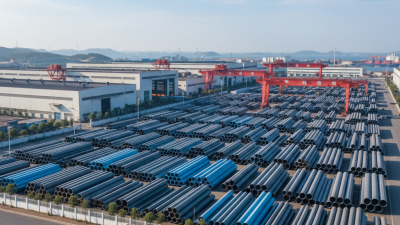
Capacity also needs careful examination. A large factory may have several production lines, but available capacity depends on tube diameter, wall thickness, grade, and delivery schedule. Ask for recent production evidence, not only annual output claims. Factory visits can reveal storage conditions, laboratory equipment, and actual process discipline. Sometimes, the brochure looks stronger than the workshop.
Certifications support confidence, but they do not replace technical checks. Confirm whether quality systems, product approvals, and test standards match the destination market. Export coverage should include experience with documentation, packing methods, customs procedures, and port handling. Strong suppliers usually understand regional standards and can arrange pre-shipment inspections. Yet communication gaps still occur. Clear drawings, agreed tolerances, and written acceptance criteria reduce costly misunderstandings. No ranking is perfect. A manufacturer suitable for structural tubes may not fit high-pressure or precision applications.
Comparative buyer benchmark covering quality systems, production capacity, certifications, and export coverage
The chart presents an anonymized 0–100 benchmark for ten leading Chinese steel tube supplier profiles. Scores combine commonly disclosed indicators such as quality-management systems, manufacturing scale, internationally recognized certifications, and breadth of export-market coverage. Buyers should verify current certificates, mill-test reports, production capacity, and destination-country compliance before placing an order.
Choosing among China’s top 10 steel tube manufacturers requires more than comparing quotations. The World Steel Association reported global crude steel production of about 1.89 billion tonnes in 2023. This scale creates broad supplier choice, but also uneven quality. Buyers should verify mill certificates, heat numbers, chemical composition, and mechanical test results. A credible manufacturer can trace one tube bundle back to its furnace batch.
Start with the application, not the factory ranking. Structural projects may require EN 10219 or ASTM A500 compliance. Pressure and energy applications often need tighter controls under ASTM A106, ASTM A53, or API 5L. Ask for recent third-party inspection records. Check wall-thickness tolerance, ovality, surface defects, coating adhesion, and hydrostatic testing. Small details matter.
Request samples before signing a large contract. Measure them independently, especially at the tube ends, where distortion can hide. The International Organization for Standardization states that ISO 9001 supports consistent process control, but certification alone does not prove product quality. That is easy to forget. Visit the production line when possible, or use an accredited inspection agency. Review export experience, packaging strength, lead times, and claims handling. A low price may reflect efficient production, or simply missing tests. The difference becomes expensive later. No supplier is perfect. A practical buyer records weaknesses as carefully as strengths.
| Rank | Manufacturer Type to Prioritize | Main Tube Products | Relevant Standards | Typical Applications | Documents and Tests to Request | Best Selection Indicator |
|---|---|---|---|---|---|---|
| 1 | Carbon steel seamless tube specialist | Seamless carbon steel tubes for pressure and mechanical service | ASTM A106, ASTM A53, GB/T 8162, GB/T 8163 | Steam lines, oil and gas service, structural and general mechanical use | Mill test certificate, chemical analysis, tensile test, flattening or bend test, hydrostatic or nondestructive test where specified | Demonstrated control of wall thickness, heat treatment and traceability by heat number |
| 2 | API line pipe manufacturer | Seamless or welded line pipe for pipeline transportation | API Specification 5L, ISO 3183 | Oil, gas, water and other pipeline transportation systems | Product specification level, grade, PSL requirements, hydrostatic testing, weld inspection and full material traceability | Ability to match pipe grade, PSL, dimensions, end finish and project-specific inspection requirements |
| 3 | Structural hollow section producer | Square, rectangular and circular structural hollow sections | ASTM A500, EN 10219, EN 10210 | Buildings, bridges, frames, towers and general steel structures | Section dimensions, corner radius, yield strength, tensile strength, elongation and weld quality records | Consistent dimensional tolerance and reliable supply of the required structural grade |
| 4 | Large-diameter welded tube manufacturer | Longitudinally welded or spiral welded large-diameter pipe | API 5L, ISO 3183, ASTM A53 where applicable | Water transmission, piling, pipeline and infrastructure projects | Weld procedure records, ultrasonic or radiographic inspection, hydrostatic test results and coating records | Verified welding procedures, stable weld quality and capability for project-specific lengths and coatings |
| 5 | Stainless steel tube specialist | Austenitic and ferritic stainless seamless or welded tubes | ASTM A312, ASTM A269, EN 10217-7 | Food processing, chemical equipment, heat exchangers and sanitary piping | Grade confirmation, PMI where required, surface finish, intergranular corrosion testing and dimensional inspection | Correct alloy selection, clean internal surfaces and documented passivation or finishing process |
| 6 | Boiler and heat-exchanger tube supplier | Carbon steel, low-alloy and stainless heat-transfer tubes | ASTM A192, ASTM A179, ASTM A213, EN 10216 | Boilers, condensers, heat exchangers and high-temperature equipment | Heat treatment records, hydrostatic or eddy-current testing, tensile testing and surface inspection | Experience with required temperature, pressure, tube length and nondestructive testing levels |
| 7 | Precision mechanical tube producer | Cold-drawn, cold-rolled and precision-finished tubes | EN 10305, ASTM A519 and application-specific specifications | Automotive parts, hydraulic cylinders, machinery and precision assemblies | Outside and inside diameter inspection, straightness, surface roughness, hardness and mechanical testing | Tight dimensional tolerances, consistent surface quality and reliable repeat-order performance |
| 8 | Galvanized and coated tube supplier | Hot-dip galvanized, zinc-coated, painted or epoxy-coated steel tube | ASTM A53, ASTM A123 for hot-dip galvanized coatings where applicable | Fencing, construction, agricultural systems, scaffolding and outdoor structures | Coating thickness, adhesion, appearance, corrosion protection and base steel inspection | Clearly defined coating standard, measurable coating thickness and suitable export packaging |
| 9 | Fire-sprinkler and fluid-service tube supplier | Welded or seamless tubes for water and fluid distribution | ASTM A53, ASTM A795 and applicable regional building requirements | Fire protection systems, water lines and industrial fluid service | Hydrostatic testing, dimensional inspection, coating details and compliance documentation requested by the project | Product compliance is verified against the exact fire-protection or piping requirement, not only a general steel standard |
| 10 | Project-customized export manufacturer | Custom sizes, cut lengths, threaded ends, bevelled ends and fabricated tube assemblies | Customer drawings plus the applicable ASTM, EN, API or GB/T standard | Infrastructure, industrial equipment, prefabricated systems and international OEM projects | Approved drawings, inspection and test plan, packing list, certificate of origin and complete commercial documentation | Ability to control engineering changes, packaging, shipment schedules and after-sales documentation |