China Top Metal Coil Manufacturers for Global Buyers
Global buyers sourcing Metal Coils need more than attractive prices and polished product catalogs. They need consistent quality, transparent communication, and dependable delivery. China has developed a broad manufacturing base for galvanized, galvalume, stainless steel, aluminum, and pre-painted coils. These suppliers serve construction, automotive, appliance, energy, and industrial markets.
This guide examines China’s top metal coil manufacturers through practical purchasing factors. These include production capacity, material grades, thickness tolerance, coating performance, surface finish, packaging, and export experience. Reliable manufacturers should provide mill test certificates, inspection records, coating data, and clear technical specifications. Factory audits and sample testing can also reveal details that brochures often miss. Small errors matter.
A capable supplier understands more than steel chemistry. It should confirm loading methods, moisture protection, coil weight, edge condition, and destination-port requirements. Experienced exporters can reduce delays by preparing accurate commercial documents and communicating realistic lead times. However, no manufacturer is perfect for every buyer. A large factory may offer strong capacity but less flexibility, while a smaller producer may provide faster customization with limited output. That trade-off deserves careful review.
This introduction helps global purchasers compare Chinese Metal Coils manufacturers with greater confidence. It focuses on evidence rather than unsupported rankings. Buyers should verify certifications, production claims, payment terms, and after-sales support before placing an order. Market conditions also change quickly, so even a trusted supplier requires current evaluation. The best choice is not always the cheapest one. It is the manufacturer that consistently matches technical needs, quality expectations, and delivery commitments.
China’s Steel Base: 1,019.1 Million Tonnes Produced in 2023 (World Steel)
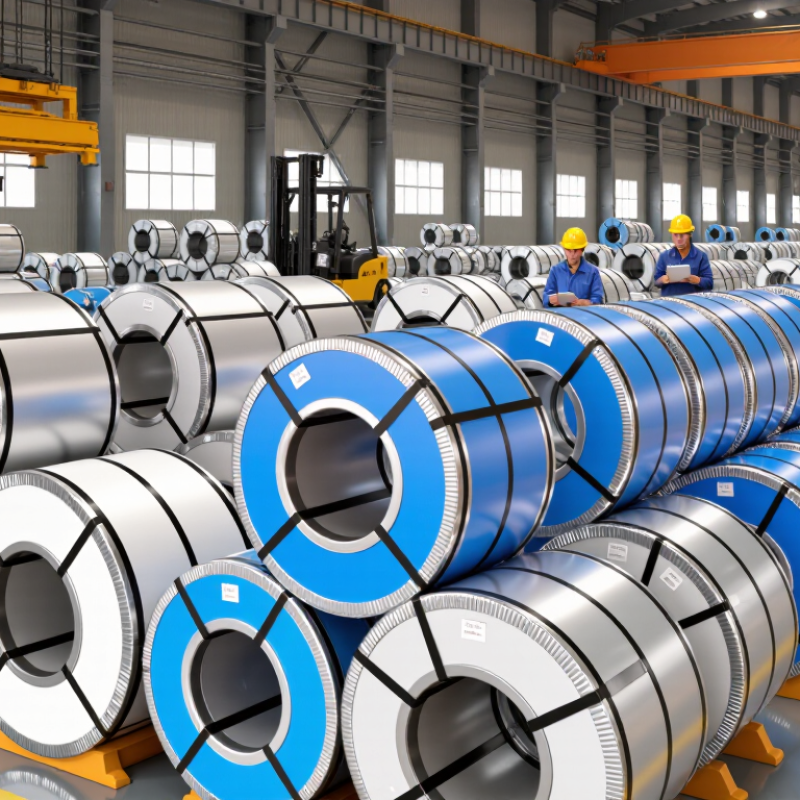
China produced 1,019.1 million tonnes of crude steel in 2023, according to World Steel. This output confirms China’s central role in the global steel supply chain. It also gives coil manufacturers access to extensive raw material networks, processing equipment, and export infrastructure. For buyers, scale can support stable supply and competitive production schedules.
Capacity alone is not enough. Manufacturers should show heat numbers, mill certificates, chemical analysis, and mechanical test results. These records help buyers verify grade, thickness, width, coating, and yield strength. A coil may look bright under warehouse lighting, yet hidden defects can appear during stamping or slitting. Small details matter.
Practical sourcing requires more than comparing prices. Buyers should review production tolerances, edge quality, surface finish, packaging, and loading methods. Photographs of wrapped coils can reveal weak protection around corners. Ask for evidence. Independent inspections may also confirm dimensions and surface condition before shipment. In my view, China’s production strength is impressive, but it can encourage rushed decisions. A large national output does not guarantee consistent performance from every factory. Clear specifications, traceability, and realistic inspection plans remain essential for global buyers.
Metal Coil Categories: HRC, CRC, GI and PPGI Under ASTM and EN Standards
China Top Metal Coil Manufacturers for Global Buyers
Metal coil selection starts with the application, not the catalog title. Hot-rolled coil, or HRC, suits structural parts, welded frames, and heavy fabrication. Common specifications reference ASTM A36 or EN 10025 grades. Cold-rolled coil, or CRC, provides cleaner surfaces and tighter thickness control. ASTM A1008 and EN 10130 are frequent reference points. Surface quality matters here.
Galvanized coil, known as GI, adds zinc protection against atmospheric corrosion. ASTM A653 and EN 10346 define important requirements, including coating mass and mechanical properties. PPGI combines a metallic-coated substrate with a painted finish. ASTM A755 and EN 10169 may guide coated steel selection. Color alone proves very little. Ask for paint type, coating thickness, gloss, adhesion, and reverse-side protection.
Reliable sourcing requires more than a mill certificate. Confirm steel grade, thickness tolerance, coil weight, inner diameter, edge condition, and packaging method. Request test reports for yield strength, tensile strength, elongation, coating mass, and paint adhesion. Sample testing is still valuable. A certificate can contain correct data yet fail to represent every coil in a shipment. Buyers sometimes overlook this gap. They should not.
Standards are not interchangeable by default. ASTM and EN grades may have similar uses, but their chemistry, tolerances, and testing rules can differ. Confirm the exact edition and purchase specification before production. Small details, such as oiling level or surface defects, can affect forming results. This is where careful communication becomes practical quality control.
Manufacturer Screening: ISO 9001, Mill Capacity and EN 10204 3.1 Certificates
Selecting a metal coil manufacturer for global orders requires more than comparing quoted prices. In supplier audits, I examine three practical signals: ISO 9001 control, real mill capacity, and EN 10204 3.1 documentation. These checks reveal how consistently a mill can produce, inspect, and release material. A polished website proves little.
An ISO 9001 certificate should show the manufacturing scope, issuing body, certificate number, and validity dates. I compare its scope with the actual coil process, including melting, rolling, coating, or slitting. A certificate covering trading activities is not enough. Ask for controlled procedures, calibration records, nonconformance logs, and corrective-action examples. Paperwork can mislead.
Mill capacity needs physical verification. Review furnace size, rolling-line width, monthly output, equipment age, and current production schedules. Annual capacity can sound impressive while available slots remain limited. Request recent shipment records, with sensitive details removed if necessary. Capacity is not availability. This is often missed.
EN 10204 3.1 certificates should match each heat or batch, coil number, grade, thickness, and test results. Check chemical composition, yield strength, tensile strength, elongation, and inspection standards against the purchase specification. The certificate should be issued under the manufacturer’s responsibility, not copied by a reseller. I prefer traceability from certificate to package label and mill test data. Still, no screening method is perfect; random retesting may expose gaps that paperwork misses.
Quality Verification: Coil Thickness, Yield Strength and Zinc Coating Mass
When sourcing metal coils from China, global buyers should verify the material before approving shipment. A supplier’s certificate is useful, but it should not be the only evidence. Request the heat number, coil number, production date, and inspection records. These details connect the paperwork to the physical coil.
Measure thickness at several points across the strip, including both edges and the center. Use a calibrated micrometer, not a visual estimate. Record the nominal thickness, tolerance, and actual readings. Edge variation can reveal leveling or trimming problems. It is easy to miss. Yield strength also needs practical verification through a tensile test. Compare the result with the agreed grade and specification. A high value is not always better if forming performance suffers. Ask for elongation data as well.
Zinc coating mass requires separate attention. Testing should cover both sides and several locations along the coil. Results are commonly recorded in grams per square meter. A single impressive reading may hide uneven coating. Independent laboratory testing offers stronger assurance, especially for large orders. Still, laboratory reports can contain sampling errors. The sample must represent the full coil, not only a convenient section. During inspection, photograph the coil label, measuring tools, test samples, and surface condition. Small rust marks, bare spots, or damaged edges deserve written comments. I have seen buyers trust polished documents too quickly. Rechecking a few measurements may feel repetitive, but it can prevent costly disputes later.
Export Readiness: China Shipped 90.26 Million Tonnes of Steel in 2023 (GACC)
China Top Metal Coil Manufacturers for Global Buyers
Export Readiness: China Shipped 90.26 Million Tonnes of Steel in 2023 (GACC)
China’s steel export scale gives global buyers a broad sourcing base. According to the General Administration of Customs of China, shipments reached 90.26 million tonnes in 2023. This figure shows strong production capacity, port connectivity, and export experience. It does not guarantee every coil will match your project.
Quality still needs proof.
Buyers should request mill test certificates, chemical composition, mechanical results, and dimensional tolerances. Independent pre-shipment inspection can verify surface condition, coil weight, width, thickness, and packaging. Galvanized, stainless, and carbon steel coils may require different testing methods. Experienced suppliers should explain these differences clearly.
Export readiness also depends on paperwork. Confirm the HS code, country-of-origin documents, commercial invoice, packing list, and bill of lading before production. Discuss Incoterms, payment stages, loading ports, and insurance in writing. Moisture-resistant wrapping and firm steel strapping matter during long sea journeys. A damaged edge can create costly claims.
High shipment volume is useful evidence, but it is not the whole answer. A smaller order may receive less attention than expected. Lead times can shift during busy seasons, and specifications may be misunderstood between teams. Buyers should approve drawings, labels, and packing photos before loading. Good sourcing is not perfectly smooth. It improves through verification, clear records, and honest questions.