What is Hot Rolled Steel and How is it Used in Industries?
Hot Rolled Steel is a crucial material in various industries, known for its versatility and strength. According to a recent report by the World Steel Association, the hot rolled steel market is expected to grow significantly by 2025, driven by demand from construction and automotive sectors. This type of steel undergoes a heating process, making it malleable for shaping and forming.
Industry expert John Smith, a metallurgical engineer, emphasizes the advantages of Hot Rolled Steel, stating, "It combines strength with ductility, making it ideal for diverse applications." This steel is often used in structural beams, automotive parts, and pipelines. However, despite its advantages, some challenges remain. Its susceptibility to surface imperfections can pose issues for specific applications.
Understanding Hot Rolled Steel's role in the industry is essential. It powers infrastructures and supports technological advancements. Yet, the industry's focus on quality control must remain vigilant to address potential flaws. Continuous innovation in production techniques is critical to meet evolving industry needs and standards.
Definition and Characteristics of Hot Rolled Steel
Hot rolled steel is a type of steel that is formed at high temperatures. Typically, it is processed above 1,700°F. This process makes the steel easier to shape and form. The result is a material with a rough surface finish and slightly rounded edges. These characteristics can be advantageous for certain applications, but they do have limitations.
In terms of properties, hot rolled steel shows lower yield strength compared to cold rolled steel. According to industry reports, the global market for hot rolled steel was valued at approximately $450 billion in 2022. It is commonly used in various industries, including construction and manufacturing. Hot rolled steel's malleability allows for complex shapes, which are essential in structural components. The lower cost of production appeals to many manufacturers, despite some potential surface imperfections.
Companies using hot rolled steel need to consider its properties carefully. While it is ideal for applications requiring toughness, it may not meet the requirements for precision component manufacturing. The material’s tendency to warp during cooling can lead to challenges in fabrication. As industries evolve, the demand for hot rolled steel remains significant, yet its limitations prompt continuous research into improving its characteristics for better performance in various applications.
The Process of Hot Rolling Steel: An Overview
Hot rolling is a crucial process in steel manufacturing. The process begins with large steel billets being heated to temperatures above 1,700°F. This makes the steel malleable and easier to shape. After heating, the steel is passed through a series of rollers to flatten and form sheets or plates. This high-temperature technique retains flexibility in the material, making it ideal for various industrial uses.
In the construction industry, hot rolled steel is widely popular. It is often used for structural beams, columns, and reinforcements. According to the World Steel Association, over 1.5 billion tons of steel were produced in 2020, with a significant percentage being hot rolled. This shows the strong demand for hot rolled products across multiple sectors.
Tip: When selecting hot rolled steel, consider its surface finish and mechanical properties for your specific application. Assess potential durability issues like corrosion, as hot rolled steel may require additional coatings. Familiarize yourself with your local suppliers to ensure you're getting quality materials. Understanding these factors can lead to better project outcomes.
Common Applications of Hot Rolled Steel in Various Industries
Hot rolled steel is known for its distinctive properties and applications across various industries. It is created through a specific process that involves heating steel above its recrystallization temperature, making it malleable for shaping. This process helps in reducing internal stresses and achieving uniform thickness. Hot rolled steel finds its way into construction and manufacturing due to its affordability and versatility.
In the construction sector, hot rolled steel serves as a backbone for steel frames and structural supports. It offers durability and strength, making it ideal for load-bearing walls and beams. Additionally, it is often used in the creation of bridges and high-rise buildings. In the automotive industry, hot rolled steel is utilized in producing car chassis and other body parts. Its ability to withstand high levels of stress and strain is crucial for vehicle safety.
Despite its advantages, hot rolled steel can have surface imperfections, which may affect its appearance. These imperfections often arise from the cooling process. While some industries can overlook these flaws, others may require precise surface finishes. This inconsistency can pose challenges for manufacturers aiming for high standards. Understanding the strengths and weaknesses of hot rolled steel is essential for its effective application in these industries.
Advantages of Using Hot Rolled Steel in Manufacturing
Hot rolled steel is a favorable choice in various industries, particularly in construction and manufacturing. One key advantage is its cost-effectiveness. According to the World Steel Association, hot rolled products can lower production costs by up to 20% compared to cold rolled steel. This reduction is significant in large-scale projects where budgets are tight.
Another benefit is the flexibility in dimensions. Hot rolled steel comes in different shapes. Industries often use it for structural beams, plates, and bars. The properties of hot rolled steel allow for easy molding and shaping. This adaptability meets diverse industry needs. However, the process involves high temperatures, which may lead to dimensional inaccuracies. Such aspects must be evaluated during production.
Tips for selecting hot rolled steel involve understanding specific project requirements. Consider load conditions and environmental factors. Conduct comprehensive research on mechanical properties. Not every application is suitable for hot rolled steel. Ensure it meets necessary standards for your particular use to prevent unexpected failures.
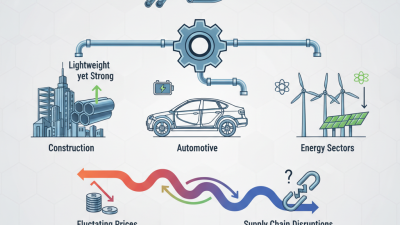
Hot Rolled Steel Usage Across Industries
Comparative Analysis: Hot Rolled Steel vs. Cold Rolled Steel
Hot rolled steel and cold rolled steel are crucial materials in various industries. Hot rolled steel is produced by heating metal above its recrystallization temperature. This process allows for easier shaping and manipulation. It typically has a rougher surface finish and less precise dimensions, which can be a drawback in certain applications. However, its lower cost and improved ductility make it a popular choice for structural components and heavy machinery.
On the other hand, cold rolled steel undergoes further processing at room temperature. This method results in a smoother surface and tighter tolerances. Cold rolled steel is often used in applications where aesthetics and precise dimensions are essential, like automotive body parts. While cold rolled steel can provide a better finish, it tends to be more expensive and less malleable compared to its hot rolled counterpart. Industries must carefully assess their specific needs when choosing between these two types. Analyzing the intended use can reveal weaknesses in either type, prompting further consideration.
What is Hot Rolled Steel and How is it Used in Industries? - Comparative Analysis: Hot Rolled Steel vs. Cold Rolled Steel
| Property |
Hot Rolled Steel |
Cold Rolled Steel |
| Manufacturing Process |
Rolled above recrystallization temperature |
Rolled below recrystallization temperature |
| Surface Finish |
Rough and scaled |
Smooth and shiny |
| Tensile Strength |
Moderate |
High |
| Applications |
Construction, structural components |
Automotive parts, electronics |
| Cost |
Less expensive |
More expensive |
| Flexibility |
Higher flexibility |
Lower flexibility |