How to Choose the Right I Beam for Your Project?
When embarking on a construction project, selecting the right I Beam is crucial. Industry expert David Harrison, a structural engineer with over 20 years of experience, once said, "Choosing the right I Beam can make or break your project." This emphasizes the importance of making informed decisions in selection.
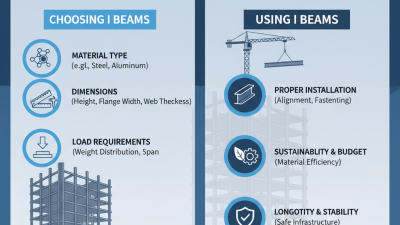
Various factors should influence your choice. The beam's size, weight, and material will impact structural integrity. A well-fitted I Beam can enhance load-bearing capacity and longevity. However, potential candidates may sometimes seem nearly identical, yet their applications differ. Thus, scrutiny is essential.
Remember, no project is without its challenges. Sometimes, despite careful planning, the chosen I Beam may not perform as expected. It's vital to reassess and understand why. Seeking expert advice can illuminate potential pitfalls and uncover better materials or designs. Reliability in decisions related to I Beams is the foundation of successful construction.

Understanding the Different Types of I Beams and Their Applications
When selecting an I beam for your project, understanding the various types is crucial. I beams are classified based on their shape, dimensions, and material. Common types include standard I beams, wide flange beams, and light weight beams. Each serves different purposes; for instance, wide flange beams are typically used in heavy construction, while light weight beams might be suitable for residential structures.
Tips: Consider your project's load requirements. Consult structural engineers if uncertain. Remember that a heavier beam can support more weight, but it also adds to the overall structure cost.
Different applications also dictate specific beam types. For bridges, longer spans are essential, making wide flange beams preferable. In contrast, for roof supports, standard I beams might suffice. However, miscalculation can lead to structural issues, risking safety and budget.
Tips: Always check local building codes before making a selection. Prioritize reliability over cost to reduce future repairs. Taking time to research can prevent costly mistakes.
Evaluating Load-Bearing Capacity: Key Specifications for I Beams
When selecting the right I beam for a project,
load-bearing capacity is paramount.
Understanding key specifications can prevent structural failures. The American Institute of Steel
Construction (AISC) reports that various I beam sizes differ significantly in strength and flexibility.
The parameters to consider include the yield strength, depth, and flange width of the beam.
For instance, a W10x15 beam can support loads differently compared
to a W10x30 beam, despite their similar depths. The
W10x30 has greater load-bearing capability due to its
increased weight and cross-sectional area. It’s crucial to have accurate calculations. Relying
solely on general guidelines can lead to suboptimal choices. Industry reports recommend using
load tables and engineering software
for precise assessments.
Be mindful that environmental factors also influence your selection. Beams subjected to dynamic
loads, such as those from machinery, may require additional consideration. Potential overlooked
variables include temperature variations
and soil conditions. Failing to assess
these can result in inadequate support and safety hazards. Consulting with a
structural engineer is advisable for
more complex requirements.
Material Considerations: Steel vs. Aluminum I Beams for Project Needs
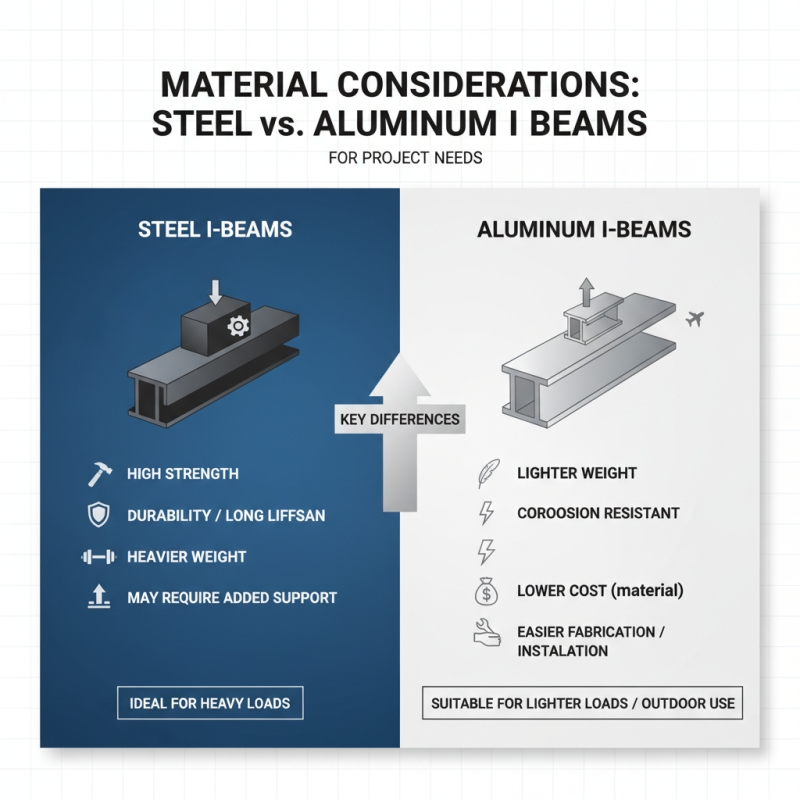
When selecting I beams for your project, material is a crucial consideration. Steel and aluminum I beams each offer unique advantages and limitations. Steel beams are known for their high strength and durability. They are often preferred for heavy loads and have a longer lifespan. However, they can be heavier and may require additional support due to their weight.
Aluminum I beams, on the other hand, are lightweight and resistant to corrosion. This makes them ideal for projects where weight is a primary concern, such as in aerospace or marine applications. Yet, they may not bear as much load as steel. If your project involves significant weight, consider how aluminum’s limitations might impact your structure.
Tips: Ensure you assess the load-bearing requirements of your project. Think about the environmental conditions that may affect the materials. It’s essential to weigh these factors carefully. In some cases, compromising on material choice may lead to structural issues later. Always seek expert advice when in doubt about material selection.
Determining the Correct Size: Height, Flange Width, and Weight Factors
Choosing the right I Beam is crucial for structural integrity. Understanding height, flange width, and weight is essential. The height of the I Beam affects load-bearing capacity. Taller beams support more weight, but they may be heavier and more expensive.
Flange width also plays a vital role. A wider flange increases stability and reduces bending. However, it can lead to increased material costs. Keep in mind that your project needs will dictate the specific requirements of the I Beam.
Tips: Always calculate the load requirements before selecting a beam. Consult structural engineers for advice. Consider future expansion; it’s better to overestimate than underestimate. Additionally, think about installation challenges. Poorly chosen beams can complicate the construction process, leading to delays and extra costs. Don’t overlook any aspect of your project. Refine your choices based on practical evaluation and expert consultation. This ensures safety and efficiency in your design.
Quality Standards and Certifications: Ensuring Compliance in I Beam Selection
When selecting an I beam for your project, understanding quality standards and certifications is crucial. Industry standards, such as ASTM and ISO, set benchmarks that ensure structural integrity and safety. Recent reports indicate that compliance with these standards reduces failure rates by up to 30%. This compliance ensures that the I beams will perform under stress.
Certifications like CE marking and AISC certification are indicators of reliable products. They assure that the I beams have been rigorously tested for durability and performance. However, selecting an I beam solely based on these certifications can be misleading. Not all certified beams are equal. Variations in manufacturing processes or materials can affect strength.
Moreover, industries sometimes face challenges in keeping up with changing standards. Regular updates to regulations can create confusion. An informed decision requires ongoing education and awareness of these standards. Accessing independent testing data is essential for a thorough evaluation. Always verify the authenticity of documentation when possible. Ultimately, balancing quality with compliance is key for any construction project.
How to Choose the Right I Beam for Your Project? - Quality Standards and Certifications: Ensuring Compliance in I Beam Selection
| I Beam Type |
Material |
Weight per Foot (lbs) |
Yield Strength (ksi) |
Certification Standards |
| W10x22 |
Steel |
22 |
36 |
ASTM A992 |
| W12x40 |
Steel |
40 |
50 |
ASTM A992 |
| W14x30 |
Steel |
30 |
36 |
ASTM A992 |
| W8x10 |
Steel |
10 |
36 |
ASTM A36 |
| W10x15 |
Steel |
15 |
36 |
ASTM A36 |