How to Choose Steel Piles for Your Construction Projects?
Choosing steel piles for construction projects can be daunting. The clashing factors of soil types, load-bearing capacities, and environmental conditions require careful consideration. Steel piles provide strong support and durability, but not all options fit every project.
When selecting steel piles, it’s vital to assess site conditions. The ground's load characteristics will guide the decision-making process. Projects in coastal areas face different challenges compared to those inland. A thorough understanding of these nuances promotes effective choices.
Moreover, consulting with experts ensures reliability. Their professional insights can illuminate potential pitfalls to avoid. This collaboration fosters innovation, leading to more efficient construction practices. Taking time to reflect on the optimal use of steel piles can yield significant long-term benefits for any construction endeavor.
Understanding the Types of Steel Piles Available for Construction
When selecting steel piles for construction, understanding the different types available is crucial. Steel piles primarily fall into two categories: displacement piles and replacement piles.
Displacement piles push the soil aside as they are driven into the ground, making them suited for dense soils. Replacement piles, on the other hand, remove soil during installation and create space for the pile. This distinction affects load-bearing capacity and the method of installation, which is key for project planning.
Another essential type is tubular steel piles. They offer high load capacity and are often used in marine environments due to their durability against corrosion.
Moreover, they can be filled with concrete, enhancing their structural integrity. However, choosing the right type also depends on the surrounding soil conditions. For example, in soft or unstable soils, a more flexible design may be required.
While it is vital to select the appropriate steel pile type, other factors come into play. These include project budget, soil testing results, and environmental conditions. Not all projects will benefit from the most robust option, and overengineering can lead to unnecessary costs. Evaluating each project's unique characteristics is essential for success.
Evaluating Load-Bearing Capacity Requirements for Your Project
When selecting steel piles for your construction projects, evaluating load-bearing capacity is crucial. This capacity refers to how much weight the piles can support. According to industry standards, the load-bearing capacity of steel piles can range from 50 tons to over 200 tons, depending on their size and shape. Therefore, accurate assessment is key for ensuring stability.
Consider soil conditions before selecting piles. Soil type impacts load-bearing capacity significantly. Clay or soft soils may require deeper piles or larger diameters to avoid uneven settlement. Professional reports suggest that using data from geotechnical surveys leads to better design outcomes. Yet, not all reports are equally reliable. Review multiple sources to gain a comprehensive view.
Tips: Always consult with a structural engineer before final decisions. Their expertise can help you choose suitable piles. Analyze past project data to understand how different pile types performed under similar conditions. This reflective approach will help you avoid potential pitfalls. Understand that every project is unique and requires tailored solutions.
Load-Bearing Capacity of Different Steel Piles
Assessing Environmental Conditions Impacting Steel Pile Selection
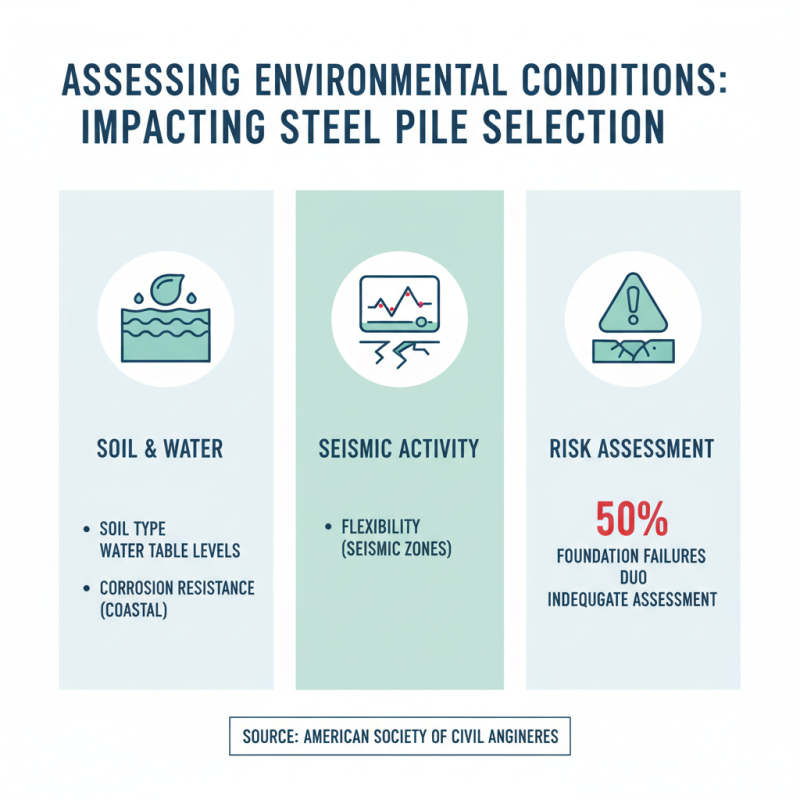
When selecting steel piles for construction projects, understanding environmental conditions is crucial. Soil type, water table levels, and seismic activity play significant roles in pile performance. According to the American Society of Civil Engineers, nearly 50% of foundations fail due to inadequate assessment of these factors. For instance, in coastal regions, corrosion resistance becomes a priority, while in seismic zones, flexibility is essential.
Soil characteristics, such as density and moisture content, influence load-bearing capacities. A study by the Foundation Engineering Association notes that saturated soils can reduce bearing capacity by up to 40%. Furthermore, unpredictable weather patterns can complicate installation processes. Continuous monitoring of environmental conditions is vital. Without thorough assessments, construction projects could face delays and financial setbacks due to unforeseen ground conditions.
Regional regulations and best practices should guide steel pile selection. Different countries have specific standards for material properties. Engaging with local geotechnical engineers can provide valuable insights. Mistakes in pile selection can lead to structural inadequacies. Reflecting on past projects reveals that oversight in environmental assessment is a common challenge, underscoring the need for meticulous planning in every construction venture.
Determining Cost-Effectiveness and Budget Considerations
Choosing the right steel piles for construction projects requires careful consideration of cost-effectiveness and budget. Steel piles are often more durable than alternatives, providing long-term savings. However, upfront costs can be significant. Evaluating your project's specific needs is crucial.
Consider the soil conditions and required load-bearing capacity. These factors influence the type of steel pile needed. Cost estimates should include fabrication, transportation, and installation. Each project may present unique challenges that could affect total expenses. Flying blind on these aspects can lead to overspending.
Reflect on the possible trade-offs between quality and price. Opting for cheaper materials might save money initially but can lead to greater costs later. A compromise on quality could result in increased maintenance or early failure. Predicting project risks helps in making informed decisions. It is essential to align your choices with both your budget and the project's long-term integrity.
Consulting with Experts and Engineers for Optimal Choices
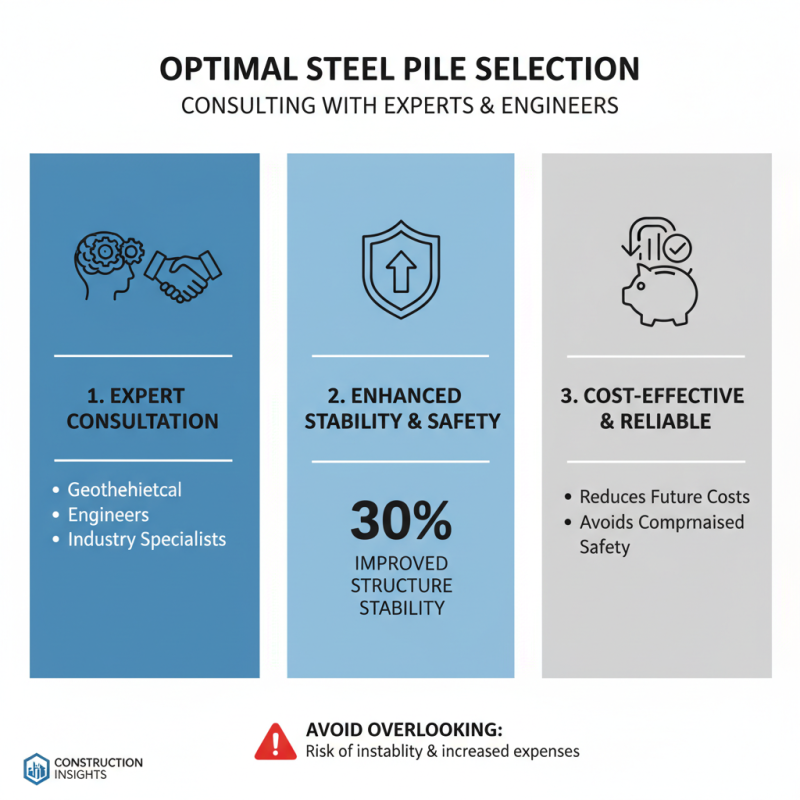
When selecting steel piles for construction projects, consulting with experts proves invaluable. Industry studies show that proper pile selection can enhance the stability of structures by up to 30%. However, many projects overlook this essential step, leading to compromised safety and increased costs. Engaging with geotechnical engineers ensures that soil conditions and load requirements are thoroughly assessed.
It's crucial to consider various factors like load capacity, soil type, and environmental conditions when selecting steel piles. A mismatch can result in significant issues, such as settlement or failure. Experienced professionals can interpret soil reports accurately, advising on the optimal type of pile for your specific site. They can provide insights based on past projects, highlighting trends and lessons learned.
Tip: Always request multiple opinions from different experts. This can uncover biases and provide a well-rounded perspective. Regular communication with engineers during the design phase can prevent costly mistakes later on. Another tip is to consider using advanced software for analysis. Such tools provide data-driven insights, reducing the margin for error in pile selection and improving project outcomes.