2026 Top Hot Rolled Steel Trends for Global Buyers?
The hot rolled steel market is undergoing significant changes as we approach 2026. Global buyers must stay informed about the latest trends shaping this industry. Hot rolled steel remains a key component in construction and manufacturing sectors, driving demand across various regions.
In recent years, sustainability and innovation have become essential. Buyers need to consider how environmental regulations influence hot rolled steel production. New technologies are emerging, affecting quality and efficiency. Not all products on the market meet the required standards, raising questions about reliability.
Additionally, fluctuating prices can complicate purchasing decisions. Buyers must analyze market forecasts and trends closely. Understanding regional supply chains is also crucial for making informed choices. The landscape of hot rolled steel is dynamic, and adaptability is necessary for success. As we look to 2026, collaboration and strategic planning will be pivotal for global buyers navigating this challenging market.

2026 Hot Rolled Steel Market Overview and Global Demand Trends
The hot rolled steel market is evolving rapidly. In 2026, global demand for hot rolled steel is set to increase. Industries such as construction and automotive are key drivers of this growth. Manufacturers are focusing on producing higher quality materials to meet rigorous standards. Enhanced quality can lead to better durability and performance. However, some manufacturers still struggle with consistency.
Sustainability is becoming a significant factor in steel production. Companies are exploring eco-friendly practices. This shift may require investment in new technologies. While some firms make progress, others lag behind. The challenge lies in balancing cost and environmental impact. Adopting green methods can attract more buyers but may increase production costs.
Global trends indicate a growing focus on innovation. Advances in steel processing technologies promise to reshape the market. Companies that invest in research may gain a competitive edge. However, the industry faces obstacles like fluctuating raw material prices. These challenges can affect overall supply and demand dynamics. It’s essential for buyers to stay informed about these trends to make strategic decisions.
Key Technological Advances Impacting Hot Rolled Steel Production
The landscape of hot rolled steel production is evolving rapidly. Key technological advancements are influencing efficiency and sustainability. Automation is at the forefront. It streamlines processes, reducing human error and improving precision. Robotics enable manufacturers to maintain consistent quality in large batches. However, reliance on technology can also lead to vulnerabilities. Over-automation may cause disruptions if system failures occur.
Another significant trend is the integration of artificial intelligence. AI enhances production planning and inventory management. It allows for predictive maintenance, which minimizes downtime. Yet, the adaptation of AI requires substantial investment. Many companies struggle with the transition from traditional methods. The learning curve can be steep, and not all employees may adapt quickly.
Sustainability remains a priority as well. Manufacturers are exploring new materials and processes. Techniques like electric arc furnace (EAF) technology reduce emissions. However, these innovations may not be accessible to all producers. Smaller firms may face financial barriers, hindering their ability to adopt greener practices. The hot rolled steel market is thus experiencing both challenges and opportunities as it moves towards a more advanced and sustainable future.
Sustainability Initiatives in the Hot Rolled Steel Industry
The hot rolled steel industry is undergoing significant changes, particularly in sustainability initiatives. Data from the World Steel Association highlights that the sector accounts for nearly 7% of global CO2 emissions. This alarming figure has pushed many steel producers to rethink their processes. They are now investing in green technologies and innovative methods that aim to reduce their carbon footprint.
One prominent trend is the adoption of electric arc furnaces (EAFs). EAFs utilize recycled steel and require less energy compared to traditional blast furnaces. Reports indicate that EAF production can lower CO2 emissions by 75%. Despite these advancements, challenges remain. The transition to greener practices is often hindered by high initial costs and the need for skilled labor.
Moreover, many companies are setting ambitious targets, such as becoming carbon-neutral by 2050. However, the path to achieving these goals is fraught with complexities. The industry's reliance on fossil fuels for transportation and material handling adds to the dilemma. Accountability and transparency will be crucial in measuring the effectiveness of these initiatives. Continued collaboration among stakeholders will be essential to drive real change in sustainability practices.
2026 Top Hot Rolled Steel Trends for Global Buyers - Sustainability Initiatives in the Hot Rolled Steel Industry
| Trend |
Description |
Impact on Sustainability |
Projected Adoption Rate (%) |
| Recycling Increased |
Enhanced processes for recycling hot rolled steel. |
Reduces waste and carbon footprint. |
75% |
| Energy Efficiency Improvements |
Adoption of more energy-efficient technologies in steel production. |
Lower energy consumption leads to reduced emissions. |
70% |
| Low-Emissions Technologies |
Integration of low-emission steel production methods. |
Significant reduction in greenhouse gas emissions. |
65% |
| Green Certifications |
Obtaining certifications for sustainable production practices. |
Improves marketability and public perception. |
60% |
| Water Recycling Technologies |
Implementation of systems to recycle water used in manufacturing. |
Saves water and reduces wastewater treatment costs. |
55% |
Influence of Trade Policies on Global Hot Rolled Steel Prices
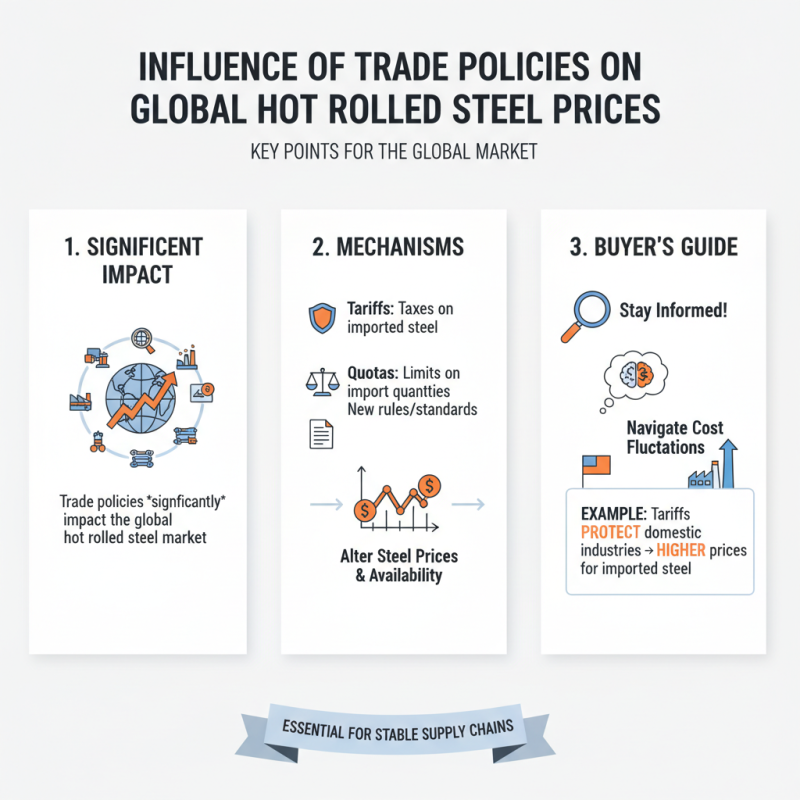
Trade policies significantly impact the global hot rolled steel market. Tariffs, quotas, and regulatory changes can alter steel prices and availability. Buyers must stay informed about these policies to navigate potential cost fluctuations. For example, nations may impose tariffs on imports to protect domestic industries. This could lead to higher prices for imported steel products.
The variability in trade policies can create uncertainty. A shift in a major economy's stance can ripple through the market. Buyers should monitor policy developments in key exporting countries. In doing so, they can better manage risks and identify opportunities. Transparency in government actions is critical for making informed purchasing decisions.
As global dynamics change, so do the factors influencing steel prices. Environmental regulations are gaining traction, affecting production costs. Companies must adapt to these evolving standards. There is a need for flexibility in sourcing materials. Buyers who take a proactive approach can gain a competitive edge in this shifting landscape.
Emerging Markets and Their Role in the Future of Hot Rolled Steel
Emerging markets are reshaping the landscape of hot rolled steel.
Countries like India and Brazil are experiencing rapid industrial growth.
They are essential players in the global steel supply chain. These regions not only boost production but also drive demand.
Investors should be aware. Not all emerging markets have robust infrastructures.
Challenges like transportation inefficiencies may hinder progress. Companies need to assess local conditions thoroughly.
Understanding the specific needs of these markets is crucial for success.
Tips: Engage with local stakeholders. Their insights can guide you through complex regulations.
Stay informed about technological advancements. Innovations in production methods can enhance quality and reduce costs.
Remember, adaptability is key in these dynamic markets.